Rocky Mount, Virginia · Project planning
Sunken Patio Edge Repair in Rocky Mount, VA
A patio edge that drops or spreads deserves attention before the damaged area grows. What will support the outer paving edge after the repair, and where will water leave?
Published by Rocky Mount Hardscape Project Guide ·
A patio edge that drops or spreads deserves attention before the damaged area grows. For a Rocky Mount project, show both the paving and the adjoining ground so the assessment can distinguish an edge problem from a wider drainage or support issue.
What will support the outer paving edge after the repair, and where will water leave?
Photograph beyond the pavers
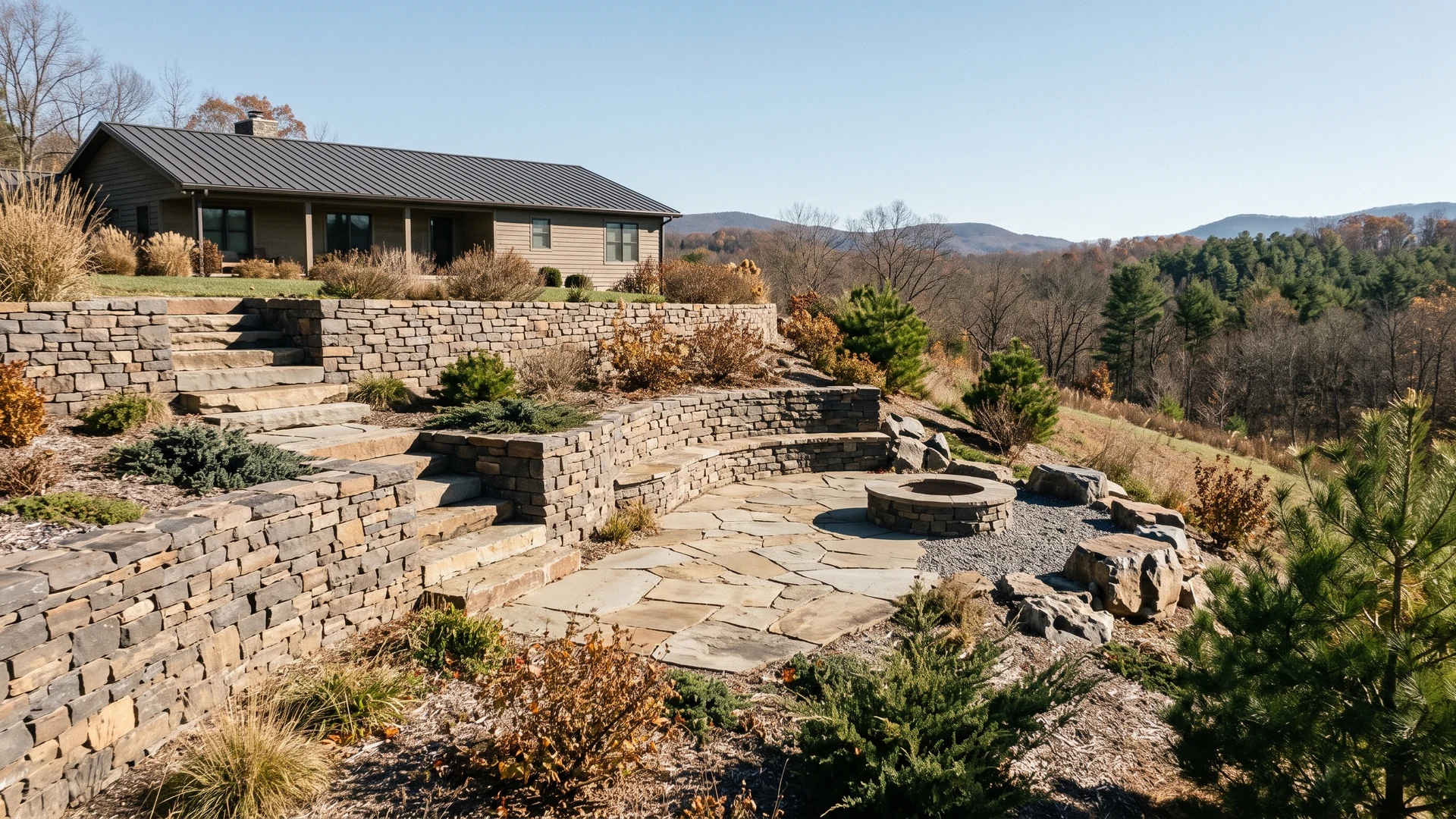
Include the lawn, planting bed or slope beside the failing edge. Note where water arrives and where it leaves. A close-up of one low paver may hide the reason support is being lost. If a retaining wall supports the patio, photograph it separately from a safe position and explain any visible changes.
Ask what the repaired boundary will be
The proposal should describe how the paving edge will be supported and how the surrounding grade meets it. Resetting the same units without addressing the boundary may leave the original issue unresolved. Ask whether the work includes restoring the adjacent ground and whether runoff needs a separate improvement.
Compare a local repair with a wider reset
An otherwise sound patio may allow a limited repair. A surface with several low areas, poor drainage or continuing movement may call for a broader scope. Ask the provider to explain the evidence for that choice. Keep proposed patio repairs distinct from structural wall work; the wall's condition needs its own assessment.
Follow the failing edge
For example, patio units beside a washed-out lawn edge can remain intact while the ground below changes. Replacing those units with new ones alone would not explain how the repaired boundary stays supported.
The edge patterns are observation prompts and cannot identify a failure without excavation and on-site assessment.
Build a Rocky Mount repair record
- Wide photographs of the whole work area, the route to the house and construction access.
- Approximate dimensions, the features you want to retain and the changes that matter most.
- Photos after rain, plus notes on when any movement, puddling or damage first appeared.
- A clear list of first-stage requirements and optional later work.
Ask for a written scope that separates preparation, installation, disposal, drainage and restoration. Identify selections that remain open and how a change is approved. A lower total is only a useful comparison when you understand the work included.
Restore support and drainage
Start with the Paver Patio Installation in Rocky Mount, VA guide, then prepare a project request. This is an independent request service, not a local contractor or office. A potential provider is identified before you approve sharing your details.
Use the printable project worksheet to organize the conversation. Requirements depend on the actual scope and parcel, not the town written in a mailing address.
Trace the edge beyond the lowest point
Mark where the patio first begins to drop and where it returns to a stable elevation. Photograph the border, adjacent soil and the full surface after rain. On a Rocky Mount property with sloping ground, lost support may show at the downhill edge, but roots, trenches, poor restraint and concentrated runoff are other possibilities. The pattern needs assessment rather than a conclusion based only on location.
Keep people and heavy furniture away from a rocking or abruptly dropped edge until it can be evaluated.
Ask how the repaired edge will stay supported
A proposal should identify how far pavers will be lifted, what base or soil correction is included, how edge restraint will be rebuilt, and where water will go. If the patio borders a drop, wall or steep grade, ask whether the edge is performing a retaining function that requires a different solution. Replacing joint sand alone does not rebuild support beneath the border.
Agree on salvage, replacement matching and final slope. Photograph patterns and cuts before removal so a reset can preserve the layout where practical.
Connect the patio edge to retaining-wall drainage
Use the Rocky Mount patio service page for the paving scope and the wall guide when the edge holds grade. The retaining-wall drainage article explains why outlets and backfill matter, while the sequencing guide helps avoid closing access too early. Return to the Rocky Mount home page to describe the whole slope.
- Measure the length and depth of the affected edge.
- Photograph it dry and after rain.
- Identify nearby walls, drains, roots and trenches.
- Require edge support and restoration details in writing.
Monitor the repaired boundary
After repair, keep dated photographs of the edge through at least one cycle of heavy rain and seasonal change. Watch the adjacent soil and outlet as well as the pavers. Do not add a raised bed or redirect a downspout against the repaired boundary without revisiting the drainage plan. Maintenance evidence cannot guarantee performance, but it can reveal whether the Rocky Mount edge remains stable or whether the surrounding grade is changing again.
Related local reading
- Retaining Wall or Patio First in Rocky Mount?
- Pavers vs. Natural Stone for Rocky Mount Patios
- Rocky Mount VA Hardscape Permits and Wall Rules
- What Affects Hardscape Cost in Rocky Mount, VA?
Sources and further checks
Before excavation, review Virginia 811 homeowner guidance, including its explanation of private lines. Local approval details remain in the linked jurisdiction guides; confirm them with the responsible office for your property.
Prepare a project request
Bring your photos, rough dimensions and priorities. Explain what you want to change and where the property is located.
Prepare a project request Call (540) 352-3813