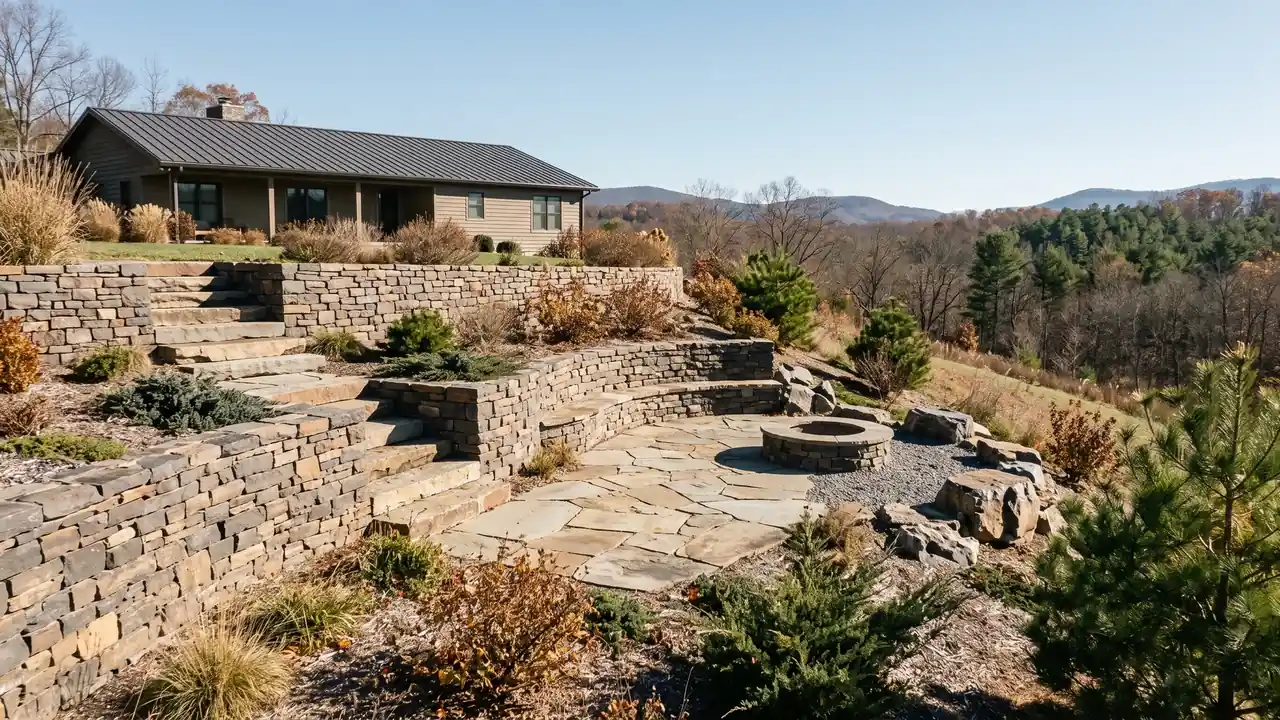
Fire pit installation in Rocky Mount, VA starts with the type, wood or gas, then a base, noncombustible materials and a seating zone with routes that stay clear of the heat. Slope, wind and drainage change placement on Franklin County lots, and gas work belongs with qualified trades. This website is a request service rather than an installer, and names a provider only after you approve.
Want a chimneyed fireplace instead? See outdoor fireplace installation in Rocky Mount.
Fire-pit and outdoor-fireplace planning in Rocky Mount, Virginia is for homeowners who want a gathering feature placed deliberately within the yard, not added wherever open space happens to remain. This page organizes fuel, grade, seating, circulation, and future utility questions into a useful request. Rocky Mount Hardscape Project Guide is an independent request service, not an installer.
What does fire pit installation in Rocky Mount involve?
The first decision is the feature type: a wood-burning fire pit, gas fire pit, masonry outdoor fireplace, or a simple cooking counter coordinated with the patio. Each has different combustion, venting, utility, foundation, and clearance questions. The layout also needs a defined seating zone, routes that do not cut too close to heat, and enough room to move around furniture without backing toward an edge or step.
A permanent feature may need excavation, a footing or structural base, noncombustible materials, drainage around the foundation, and gas or electrical work by qualified parties. A fireplace also introduces height, wind, smoke direction, chimney design, and sightline questions. Manufacturer instructions and current code control product-specific details; a generic online diagram is not a site design.
When should the fire feature be planned?
Plan the feature before a new patio whenever possible. Its footprint, fuel route, foundation, and seating can then shape the surface instead of forcing cuts through completed work. The patios and pavers page covers the supporting surface, while the sloped-yard fire-feature guide focuses on grade and edge conditions.
An existing patio can sometimes receive a later feature, but the surface and base need review for the proposed load and heat exposure. Expansion may be better than crowding circulation. Temporary portable devices are a separate category and still require following their instructions and applicable fire rules.
Why do slope, wind, and drainage change placement?
A level feature on a sloped property may need a properly supported terrace rather than loose fill. Seating above a drop, steps in a dark circulation route, or a wall directly behind a chair can create conflicts even when the fire unit itself fits. Surface water also needs a route that does not pond at a gas connection, erode the edge, or run through the hearth area.
Wind is site-specific and can shift with buildings, vegetation, and terrain. Smoke and sparks from wood-burning features deserve particular attention to structures, dry vegetation, property boundaries, and neighboring use. A provider and the responsible fire or building office should verify placement and technical requirements rather than relying on a townwide assumption.
What affects the cost of a fire-feature project?
Feature type is the largest scope decision. A simple built pit differs from a masonry fireplace in foundation, material, labor, vertical construction, and possible design review. Fuel also matters: gas may involve trenching, pipe sizing, controls, and qualified trade coordination, while wood use places different demands on storage, smoke, cleanup, and clearances.
Other factors include patio expansion, retaining work, access, demolition, stone or masonry complexity, caps and hearth pieces, seating walls, drainage, lighting coordination, and restoration of disturbed areas. Outdoor-kitchen elements such as a durable counter or appliance opening add utility and manufacturer-clearance questions. This page treats that as part of the fire-area project, not a separate service claim.
Should you choose a fire pit or outdoor fireplace?
A fire pit makes the flame a center point and commonly supports seating on several sides. An outdoor fireplace creates a directional focal point and can screen a view, but it also occupies more visual and structural space. The better option follows the available footprint, preferred fuel, smoke and wind context, desired seating pattern, and the way people enter and leave the area.
Neither option should be selected by appearance alone. A feature that overwhelms the patio or blocks the safest path is not improved by premium material. Mark the proposed footprint with chairs or boxes, then walk the route at the times the space will be used.
How should you prepare a fire-feature request?
Share wide daylight photos showing the proposed area, nearby structures, vegetation, overhead conditions, fences, grade changes, and paths. Measure the rough available footprint and note the number of seats desired. Describe wood or gas preference, existing utilities you know about, and whether the feature is part of a new patio or a later phase.
Ask the Town and County which approvals apply before committing to a location; the Rocky Mount permit guide explains who handles zoning and building questions. Contact Virginia 811 before any trenching or excavation. Include unknowns openly so the reviewer can route them to the appropriate qualified party.
Use a temporary layout before masonry dimensions are fixed. Place chairs at realistic distances, leave the intended walking lanes open, and check the view from doors and windows. Repeat the exercise after dark with the fire unlit to reveal steps and edges that disappear from view. Record nearby combustible materials and anything likely to change, such as a future pergola or planting screen. For gas concepts, do not choose a trench route from appearance alone; supply capacity, controls, shutoff location, and qualified trade work need review. For wood concepts, include fuel storage, ash handling, smoke sensitivity, and emergency access among the planning questions.
What should be clarified before a provider visit?
Use a temporary layout before masonry dimensions are fixed. Place chairs at realistic distances, leave intended walking lanes open, and check the view from doors and windows. Repeat the exercise after dark with the fire unlit to reveal steps and edges that disappear from view. Record nearby combustible materials and anything likely to change, such as a future shade structure or planting screen. For gas concepts, list supply, control, shutoff, and qualified-trade questions without choosing a trench route from appearance alone. For wood concepts, include fuel storage, ash handling, smoke sensitivity, and emergency access. Ask who will coordinate utility, foundation, and masonry reviews.
Requests come from the Town of Rocky Mount and from Franklin County communities around it: Boones Mill, Ferrum, Callaway, Burnt Chimney, Wirtz, Glade Hill, Union Hall, Penhook and the Westlake side of Smith Mountain Lake. Town and County rules differ, so a provider is suggested only when one fits the job and location, and only by name with your OK.
Local rules and sources on this page were checked on October 9, 2026. Requirements change; confirm with the responsible office before work begins.
Decide the next part of your project
Use these guides to compare the work, prepare better questions and connect the service plan to the actual property.